
Baby Jessica Rescued in 1987: A Remarkable Story of Rescue
A nationwide news event. A remarkable story of rescue. The world watched. First responders answered the call. And one historic rescue left lasting lessons for emergency…
Education Resources
Compare certification pathways, understand eligibility questions, build practical wound, ostomy, and hyperbaric knowledge, and find the education route that fits your next step.
Whether you are choosing a credential, preparing for a course, improving practical clinical knowledge, or building a stronger team, start with the question in front of you.

Compare WCC, WPC, CWCA, CWS, CWSP, CHT, CHRN, and OMS-related pathways by role, clinical focus, experience, and education requirements.
Review the education, license, experience, and examination questions that may affect a wound care, wound prevention, ostomy, or hyperbaric credential pathway.
Build knowledge in wound assessment, prevention, peristomal skin care, hyperbaric fundamentals, patient education, care transitions, and more.
Find guidance for program leaders building clinical capability, credential readiness, team consistency, and hyperbaric bench strength.
Credential acronyms can make wound, ostomy, and hyperbaric education feel harder to navigate than it needs to be. Start by understanding the role, experience, and clinical focus each pathway is designed to support.
A plain-language guide to common wound care credential pathways, including who may be eligible, what type of clinical experience may be required, and which professionals each credential may fit.
Verified: October 2026
| WCC®Wound Care CertifiedNAWCO | CWCA®Certified Wound Care Associate™ABWM | CWS®Certified Wound Specialist®ABWM | CWSP®Certified Wound Specialist Physician®ABWM | |
|---|---|---|---|---|
| Who It's For | Licensed nurses, therapists, physicians, PAs and podiatrists who provide hands-on or consultative skin and wound care[1] | Wound care team members such as LPN/LVNs, PTAs, certified healthcare assistants (e.g., CNAs, CMAs), administrators, dietitians, researchers, and wound care sales and marketing professionals[4] | Licensed clinicians with a bachelor's, master's or doctoral degree, or a licensed RN with an associate degree[4] | Physicians (MD, DO) and podiatrists (DPM)[4] |
| License Required | Yes. Active, unrestricted RN, LPN/LVN, NP, PA, PT, PTA, OT, OTA, MD, DO or DPM license[2][3] | Only if you hold one. A professional license must be full and unrestricted in at least one state and in every state where you practice[4] | Yes. DO, DPM, MD, NP, DVM, PA, PT, OT, PharmD, RD or RN, full and unrestricted[4][5] | Yes. MD, DO or DPM, full and unrestricted[4][6] |
| Experience Required | One of: 120 hours of hands-on training with a NAWCO-approved preceptor, OR 2 years full-time or 4 years part-time wound care work within the past 5 years[1][2] | At least 3 years of cumulative wound care experience. With fewer than 3 years, the CWCA Candidate program may apply[4] | At least 3 years of clinical wound care experience, or a wound care fellowship of at least 1 year[4][5]. With fewer than 3 years, the CWS Candidate program may apply[4] | At least 3 years of clinical wound care experience, or a wound care fellowship of at least 1 year[4][6]. With fewer than 3 years, the CWSP Candidate program may apply[4] |
| Education / Course Requirement | One of: a skin and wound course of at least 20 hours that meets NAWCO Certification Committee criteria, OR an active CWCN, CWON, CWOCN, CWS or CWSP[1][2][3] | No course required. ABWM says review courses are optional[7] | No course required[7] | No course required[7] |
| Exam | Up to 110 multiple-choice questions, 2 hours. Test center, live remote proctoring, or paper after some live classes[2] | 120 multiple-choice questions (100 scored), 2.5 hours, at a Pearson VUE test center[8][9] | 150 questions (125 scored), 3 hours[8] | 180 questions (150 scored), 3.5 hours[8] |
| Published Fee | $380[2][3] | $375[9] | $595[9] | $995[9] |
| Renewal | Every 5 years, by exam, NAWCO-approved training, 60 CE hours, or mentoring[10] | Every year: $175 fee plus 6 CE hours. Retake the exam every 10 years[9] | Every year: $175 fee plus 6 CE hours. Retake the exam every 10 years[9] | Every year: $175 fee plus 6 CE hours. Retake the exam every 10 years[9] |
| WCU Course That Can Help | Wound Care Certification Prep Course | Wound Care Certification Prep Course | Wound Care Certification Prep Course | Wound Care Certification Prep Course |
Scroll sideways to see every credential.
Who It's For
License Required
Experience Required
Education / Course Requirement
Exam
Renewal
WCU Course That Can Help
These four credentials overlap, but they are built in different ways. As of October 2026, NAWCO's WCC is open to licensed nurses, therapists, physicians, physician assistants and podiatrists[1][2]. It pairs an education step with an experience step. The education step is a qualifying course of at least 20 hours, or an existing WOCNCB or ABWM wound credential. The experience step can be met with 120 preceptor hours or with two years of full-time wound care work[1][2]. ABWM's three credentials work the other way round. No course is required, but you need about three years of cumulative wound care experience, supported by professional references[4][5][7]. Which ABWM credential you sit depends on your background. CWCA covers associate-level, support and industry roles. CWS covers licensed clinicians with a bachelor's degree or higher, and associate-degree RNs. CWSP is for physicians and podiatrists[4]. Renewal also differs. WCC renews every five years[10], while ABWM credentials renew every year with six CE hours and require a new exam every ten years[9].
Requirements change. Confirm current eligibility directly with NAWCO (nawccb.org) and ABWM (abwmcertified.org).
A guide for entry-level and support-role clinicians who are focused on wound prevention, skin integrity, early risk recognition, and prevention-focused education.
Verified: October 2026
| WPC®Wound Prevention CertifiedNAWCO | |
|---|---|
| Who It's For | Frontline support roles: certified nursing assistants, medical assistants, patient care technicians, personal care aides, EMTs and paramedics. NAWCO states that the WPC is "designed and intended solely" for support roles, and recommends it for non-licensed clinicians involved in wound care[1][2][5] |
| License or Certification Required | Yes. An active, unrestricted license or certification in good standing as a CNA, MA, CCHA, LNA, PCT, PCA, EMT or paramedic[2]. NAWCO's handbook also lists certified home health aides and certified medical assistants[1] |
| Experience Required | In the past 3 years, you must currently work in a healthcare setting as a certified or licensed clinician[2]. Students enrolled in a healthcare training program who take a wound prevention course alongside it may also qualify, and can sit for the exam once both are complete[1][2] |
| Education / Course Requirement | Every candidate must complete a skin management and wound prevention course of at least 14 hours, and NAWCO requires proof of completion[1][2][3] |
| Exam | 75 multiple-choice and true/false questions, 90 minutes. NAWCO's handbook gives the passing score as 79%[1] |
| Application | Agree to the NAWCO Code of Ethics and submit a complete application with supporting documents[2] |
| Published Fee | $280 NAWCO fee. Course fees are separate[2] |
| Renewal | Every 5 years, by taking a course, retaking the exam, or completing 25 contact hours of continuing education[1] |
| WCU Course That Can Help | Wound Prevention Certification Prep Course |
Scroll sideways to see every credential.
Who It's For
License or Certification Required
Experience Required
Education / Course Requirement
Exam
Application
Published Fee
Renewal
WCU Course That Can Help
WPC is NAWCO's credential for the frontline caregivers who spend the most time at the bedside[5]. As of October 2026, NAWCO states that the WPC is "designed and intended solely" for support roles. These include certified nursing assistants, medical assistants, patient care technicians, personal care aides, EMTs and paramedics. NAWCO recommends it for non-licensed clinicians involved in wound care[1][2][5]. It covers skin management and wound prevention[5]. If you are an RN, LPN/LVN, therapist, PA or physician, compare NAWCO's WCC first, because that credential is designed for licensed practitioners[4]. Every WPC candidate must complete a skin management and wound prevention course of at least 14 hours, and NAWCO requires proof of completion[1][2][3]. The exam has 75 multiple-choice and true/false questions, with 90 minutes to finish. The credential lasts five years[1]. WPC does not, on its own, change what you are allowed to do at work. Your state and employer still set your scope of practice[1].
Requirements change. Confirm current eligibility directly with NAWCO (nawccb.org).
A guide to practical ostomy education, Ostomy Management Specialist pathways, and RN-focused WOC nursing certification considerations.
Verified: October 2026
| OMSOstomy Management Specialist®NAWCO | COCN® · CWON® · CWOCN®WOCNCB ostomy credentialsWOCNCB | |
|---|---|---|
| Who It's For | Licensed healthcare professionals: RN, LPN/LVN, NP, PA, PT, PTA, OT, OTA, MD, DO, DPM[1][2] | Registered nurses only[4] |
| Degree Required | None stated by NAWCO[1][2] | Bachelor's degree or higher, in any field[4] |
| Experience Required | The equivalent of 1 year full-time in the past 5 years as an eligible licensed professional, actively involved in caring for ostomy patients[1][2] | Traditional pathway: no hours beyond the WOC program. Experiential pathway: 1,500 practice hours per specialty in the past 5 years, with 375 in the last year[4][5] |
| Education / Pathway | One of: an ostomy course of at least 20 hours that meets NAWCO criteria; 60 CE hours in ostomy and wound care in the past 5 years (20 ostomy-specific); or national recognition as an ostomy author, speaker or organization volunteer[1][2] | Traditional pathway: graduate of a WOCN Society-accredited WOC Nursing Education Program within the past 5 years. Experiential pathway: 50 CE hours per specialty in the past 5 years[4][5] |
| Exam | Up to 100 multiple-choice questions, 2 hours, passing score 80%. Test center, live remote proctoring, or paper after some courses[2][3] | 120 multiple-choice questions per specialty exam (110 scored), 2 hours. Test center or live remote proctoring[5][6] |
| Published Fee | $380[2] | $395 for one specialty, $510 for two, $610 for three[5] |
| Renewal | Every 5 years, by exam, training, or 60 CE hours (20 ostomy-specific)[7] | Every 5 years, by exam or Professional Growth Program portfolio[8] |
| Accreditation Stated by Issuer | Not stated on NAWCO's OMS page or handbook[2][3] | ABSNC and NCCA[9] |
| WCU Course That Can Help | OMS Prep Course |
Scroll sideways to see every credential.
Who It's For
Degree Required
Experience Required
Education / Pathway
Exam
Published Fee
Renewal
Accreditation Stated by Issuer
Both credentials recognize ostomy expertise, but they suit different professionals. As of October 2026, NAWCO's Ostomy Management Specialist (OMS) is open to a range of licensed professionals, including LPN/LVNs, therapists and physicians. You need at least one year of full-time practice in the past five years[1][2]. You then qualify through one of three routes. The first is an ostomy course of at least 20 hours. The second is 60 hours of continuing education, of which 20 must be ostomy-specific. The third is national recognition as an ostomy author, speaker or organization volunteer[1][2]. WOCNCB's ostomy credentials are the COCN (ostomy), CWON (wound and ostomy) and CWOCN (wound, ostomy and continence). They are only for registered nurses who hold a bachelor's degree[4]. Nurses qualify by graduating from a WOCN Society-accredited WOC Nursing Education Program within the past five years, or through the experiential pathway of 50 CE hours and 1,500 practice hours per specialty[4]. WOCNCB states that these credentials are accredited by ABSNC and NCCA[9], and both renew every five years[7][8].
Requirements change. Confirm current eligibility directly with NAWCO (nawccb.org) and WOCNCB (wocncb.org).
A guide to hyperbaric credential pathways for technicians, nurses, and healthcare professionals working in or entering hyperbaric medicine.
Verified: October 2026
| CHT®Certified Hyperbaric TechnologistNBDHMT | CHRN®Certified Hyperbaric Registered NurseBNACB | |
|---|---|---|
| Certifying Body | National Board of Diving & Hyperbaric Medical Technology (NBDHMT)[1][2] | Baromedical Nurses Association Certification Board (BNACB). NBDHMT administers and grades the exam[4][5] |
| Who It's For | Professionals in a qualifying pathway: respiratory therapists, RNs, LPN/LVNs, NPs, PAs, EMTs/paramedics, active-duty military corpsmen and licensed physicians[2] | Registered nurses only[5] |
| Background Required | Age 18 or over with a high school diploma or equivalent, plus a criminal background check[2][3] | Unrestricted RN license, plus 2 years of hospital-based clinical experience or 1 year of critical care, plus at least 1 year of active hyperbaric experience within the last 2 years[5][6] |
| Course | An NBDHMT-approved introductory hyperbaric medicine course within 3 years of your test date[2] | A 40-hour approved entry-level hyperbaric course within 5 years. If the course is older, 40 hyperbaric (Category A) CE hours are required instead[5][6] |
| Supervised Practice | 480 clinical hours after the course, including 40 hours directly supervised by a CHT or CHRN preceptor with at least 2 years of experience. The preceptor must be named to the Board before you start[2][3] | 480 hours of direct hyperbaric patient care after the course, logged and signed by a CHRN (or CHT/RN) preceptor, plus an employer or manager recommendation letter[5][6] |
| Exam | 120 multiple-choice and true/false questions, 2 hours, taken online at a Board-recognized testing site. Passing score 70%[2][7] | 120 multiple-choice and true/false questions, 2 hours. Passing score 70%[5] |
| Published Fee | $150 registration plus $25 background check[3] | $250 for BNA members, $300 for UHMS/ACHM members, $400 for non-members[6] |
| Renewal | Every 2 years: 24 CE hours (at least 12 hyperbaric Category A) plus at least 100 verified clinical hours[2][8] | Every 4 years: 40 CE hours (at least 20 Category A)[5] |
| WCU Course That Can Help | Introduction to Hyperbaric Medicine and Wound Care | Introduction to Hyperbaric Medicine and Wound Care |
Scroll sideways to see every credential.
Certifying Body
Who It's For
Background Required
Course
Supervised Practice
Published Fee
WCU Course That Can Help
Both credentials recognize added training in hyperbaric oxygen therapy, and neither is meant as an entry-level qualification[2][5]. The CHT is open to a range of licensed or certified professionals, including respiratory therapists, nurses, EMTs and paramedics. It is issued by the National Board of Diving & Hyperbaric Medical Technology (NBDHMT)[1][2]. The CHRN is only for registered nurses. As of October 2026, it is granted by the Baromedical Nurses Association Certification Board (BNACB), while NBDHMT validates, administers and grades the exam[4][5]. Both paths begin with an approved introductory hyperbaric course. Both then require 480 hours of hyperbaric clinical work, with preceptor involvement and written verification, before you can test[2][3][5]. The CHRN adds nursing-specific requirements. You need at least two years of hospital-based nursing or one year of critical care, plus a year of recent hyperbaric experience[5]. Both exams have 120 questions with a two-hour limit and a 70% passing score[2][5]. A CHT renews every two years and a CHRN every four[2][5].
Requirements change. Confirm current eligibility directly with NBDHMT (nbdhmt.org) and, for the CHRN, the BNACB (hyperbaricnurses.org).
A course may support exam preparation or meet an education requirement where noted. It does not automatically make someone eligible to sit for an examination or earn a credential.
Open a question to see what the credentialing organizations publish. Every answer cites its source.
Usually, but not always, and the type of license matters. NAWCO's WCC and OMS require an active, unrestricted professional license, such as RN, LPN/LVN, PT, OT, PA or physician[1][3]. The WPC is designed for certified support roles such as CNAs, medical assistants and EMTs[2]. ABWM's CWCA accepts some candidates without a license, including wound care sales professionals. If you do hold a license, it must be unrestricted[5]. WOCNCB's wound, ostomy and continence credentials and the CHRN require an RN license[9][8]. WOCNCB's WTA-C is the exception, as it also accepts LPN/LVNs[9]. Check that your exact license appears on the issuer's list before you pay for a course.
This varies widely. For the WCC, you need either 120 hours with a NAWCO-approved preceptor, or 2 years full-time or 4 years part-time within the past 5 years[1]. ABWM's CWCA, CWS and CWSP require 3 cumulative years. With fewer than 3 years, you can enter ABWM's Candidate program[5]. The CHT requires 480 clinical hours after your course[6]. WOCNCB's experiential pathway requires 1,500 practice hours per specialty[9]. Ask whether the hours must be recent. Many boards count only the last 3 to 5 years[1][2][9].
Some credentials require a degree. WOCNCB requires a bachelor's degree or higher, in any field[9]. ABWM's CWS requires a bachelor's degree or higher, unless you are an RN with an associate degree[5]. The CHT requires at least a high school diploma or equivalent[6]. The NAWCO credentials reviewed here do not state a degree requirement. They rely on your license plus a course or experience[1][3].
For some credentials, yes. The WCC accepts a course of at least 20 hours that meets the NAWCO Certification Committee's criteria, or an existing wound credential instead[1]. NAWCO lists providers whose content meets its criteria, while stating that it does not accredit, approve, endorse or recommend any program[4]. The CHT requires a course approved by NBDHMT[6]. The CHRN requires a 40-hour course approved by BNACB[8]. ABWM requires no course, and says review courses are optional[7]. Always ask a provider which credential its course qualifies for, and where the issuer says so.
Sometimes it is mandatory, and sometimes it is one option among several. For the WCC, 120 hours with a NAWCO-approved preceptor is one way to meet the experience requirement[1]. The CHT requires 480 clinical hours, including 40 directly supervised hours with a preceptor you name to the Board in advance[6]. The CHRN requires a 480-hour log signed by a CHRN preceptor[8]. WOCNCB's foot care credential (CFCN) requires 40 supervised clinical hours[9]. ABWM does not require a preceptorship, but professional references must confirm your experience[10].
Plan for proof of every requirement. Typical items include a copy or verification of your license[6][9]. You will also need course certificates of completion[1][6], signed experience records or hour logs[1][8][11], and degree transcripts for WOCNCB[9]. ABWM asks for a resume, a personal statement and three professional references[10]. The CHT and CHRN also need a written preceptor notification or a recommendation letter, and the CHT requires a background check[6][8][11]. Keep copies of everything, including CE certificates. NAWCO may request copies, and ABWM states that CE is subject to audit[1][10].
Renewal cycles differ. NAWCO credentials (WCC, WPC and OMS) renew every 5 years. Options include an exam, a course, or continuing education, and WCC adds mentoring[1][2][3]. WOCNCB credentials also renew every 5 years, by exam or professional growth portfolio[9]. ABWM credentials renew every year with 6 CE hours and a fee, plus a new exam every 10 years[7]. A CHT renews every 2 years and a CHRN every 4 years[6][8].
Requirements change. Confirm current eligibility directly with the issuing body for your credential: NAWCO, ABWM, NBDHMT, BNACB or WOCNCB.
A nationwide news event. A remarkable story of rescue. The world watched. First responders answered the call. And one historic rescue left lasting lessons for emergency…
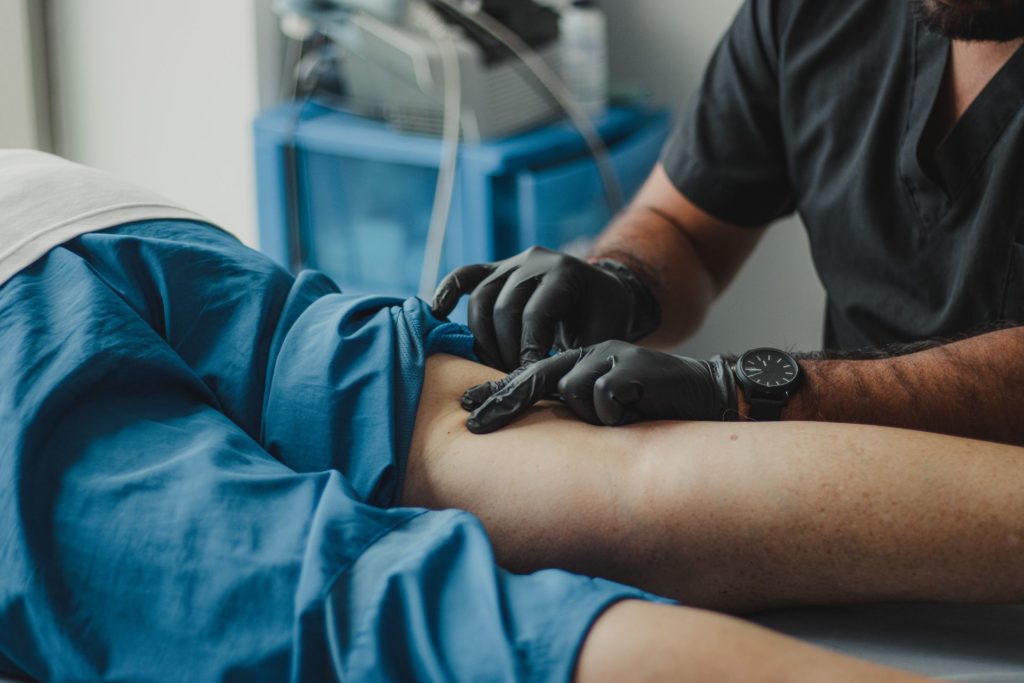
Identify the difference. Treat the cause. Not all red areas are pressure. Not all pressure looks alike. This micro-session breaks down how to tell moisture-associated skin…
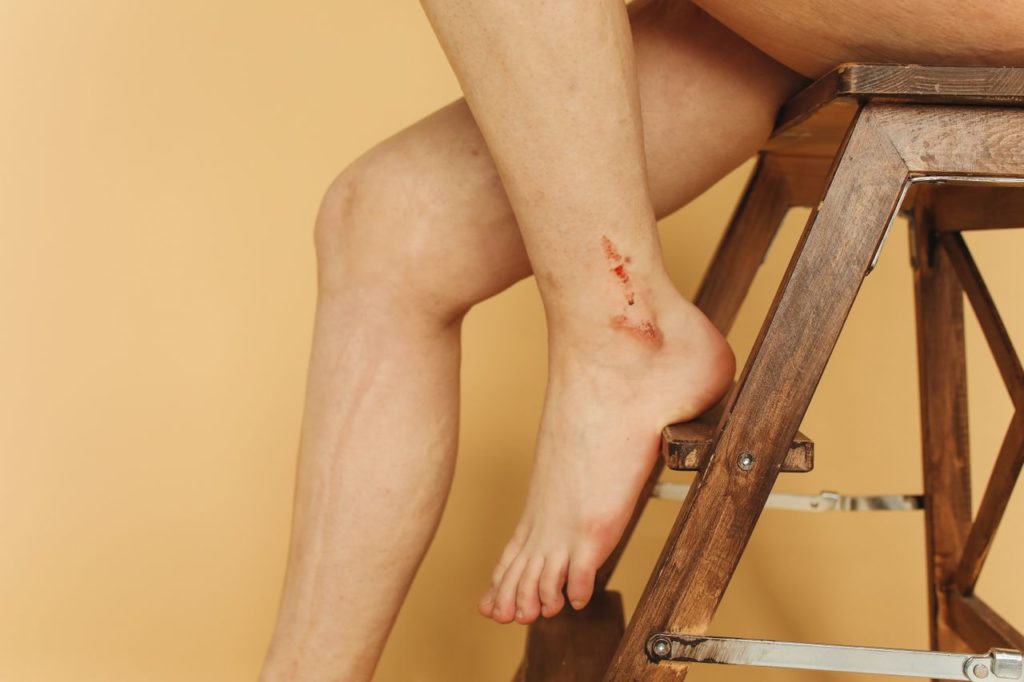
Inflammation plays a critical role in every stage of wound healing. In this episode, we break down how to recognize healthy vs. harmful inflammation, avoid misdiagnosis,…
Use these resources to identify where your program needs stronger wound, ostomy, or hyperbaric education. Start with a practical question: Is your priority foundational knowledge, credential readiness, better discharge teaching, more consistent care, or broader coverage?
WCU offers on-demand and live virtual education options. Review current course pages for exact availability.
Access periods vary by course. Confirm the current access period on the course page before enrolling.
No. A course may support exam preparation or meet a specific education requirement, but certification organizations determine final eligibility, examination approval, and credential status.
Whether you are choosing a course, mapping a credential pathway, or building education for a team, we can help you identify the right place to start.