
Here’s a heartwarming tale about a little orange and white cat that changed my lens on burn injuries, and the unexpected way my worlds to collided.
Before wound care, before the alphabet soup next to my name, my background started in the fire service. In that life, I saw firsthand what fire can do and I’ve always carried a deep compassion for burn survivors because of it.
At the same time, I’ve been fostering animals for the past 15 years. It’s something that’s always grounded me in a different way and allowed me to care for another being without the burnout.
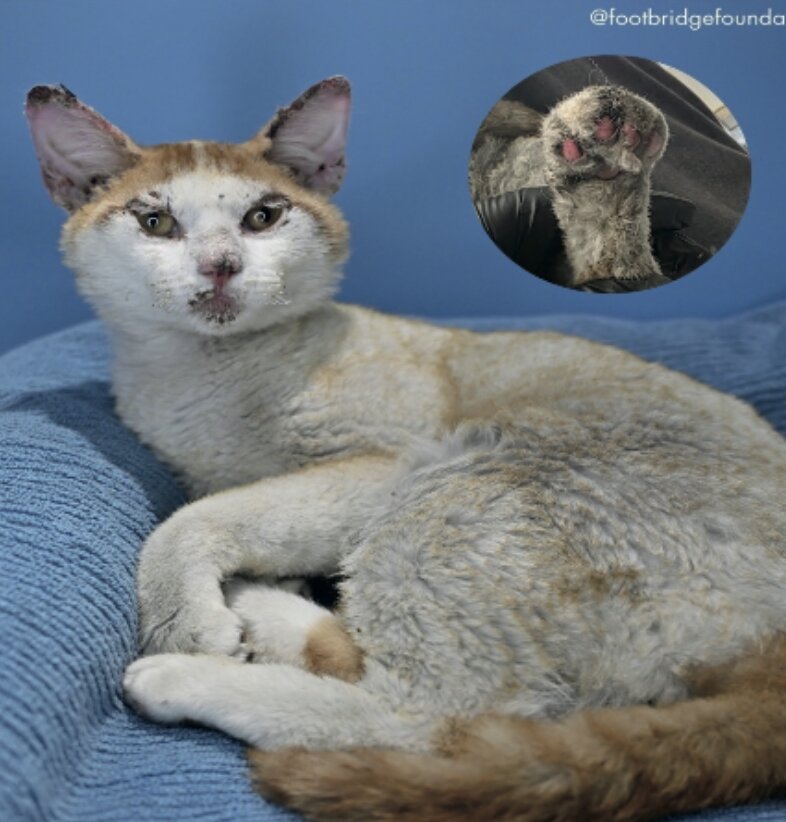
Recently, those two parts of my life came together. I was scrolling through social media when I came across a post from the Footbridge Foundation. I saw pictures of a small orange-and-white cat rescued from a structure fire. His name was Phoenix, which is incredibly fitting.
He had second-degree burns to his little pink paws. His whiskers were completely singed off. His ears and nose showed clear signs of thermal injury. But what stood out most wasn’t the extent of his wounds; it was his obvious demeanor.
Despite everything he had been through, he leaned into people. He trusted us. Over the next several weeks, Phoenix went through consistent wound care and completed his course of antibiotics. His injuries, while significant, were managed carefully and today, he’s healed remarkably well, with only a few small scabs remaining.
As a wound care clinician, it’s hard not to look at a case like this through both lenses, the emotional and the clinical. And what stood out to me most wasn’t just that he healed…It was how.
Pain Doesn’t Always Look the Way We Expect
Second-degree burns are painful. In human patients, pain is often one of the most prominent features of partial-thickness injuries. But Phoenix didn’t present the way you’d expect! He wasn’t withdrawn or reactive, and he remained gentle and patient throughout his care.
This served as an important reminder to me: pain isn’t always obvious. Whether we’re treating animals or people, we can’t rely solely on behavior to guide us. Some patients don’t express pain outwardly, which doesn’t make it any less real.
The Fundamentals Still Matter
Watching his wounds heal reinforced something we emphasize every day in wound care: the basics work.
Maintaining a moist wound environment.
Protecting fragile tissue.
Allowing the body to do what it’s designed to do.
Burn injuries (especially partial thickness) require balance.
Letting wounds dry out too quickly or form a hard eschar prematurely can delay epithelialization and increase the risk of complications.
Phoenix’s healing was a reminder that consistent, simple, evidence-based care often makes the biggest difference.
Infection Is Always Lurking
With any burn injury, the loss of the skin’s protective barrier creates an open door for infection. His course of antibiotics and close monitoring were critical in preventing complications. It’s something we navigate constantly in clinical practice, the balance between intervention and over-treatment, always watching for subtle signs that something may be changing.
Protection Is Treatment
One of the biggest challenges in his recovery was protecting his paws by using cat litter that was either paper or soy-based. Whether it’s a pressure injury, a surgical site, or a burn, ongoing trauma will undo even the best treatment plan. Offloading, positioning, and protection are just as important as any dressing or medication we choose.
You can’t heal what you don’t protect!